


Dry Ridge and Dry Verge Ruislip, Uxbridge, Kilburn
Is the mortar on your roof cracking or falling off?
If you’ve found bits of mortar in your gutters, or noticed cracks along the top of your roof, you’re not alone. It’s one of the most common roofing problems we see in this area.
The ridge is the very top of your roof, and the verge is the edge along the gable wall. On most older roofs, the tiles in both places are held down with mortar. It doesn’t last forever. Once it cracks and drops out, your tiles are loose and the weather can get in.
The fix we recommend is a dry ridge and dry verge system.
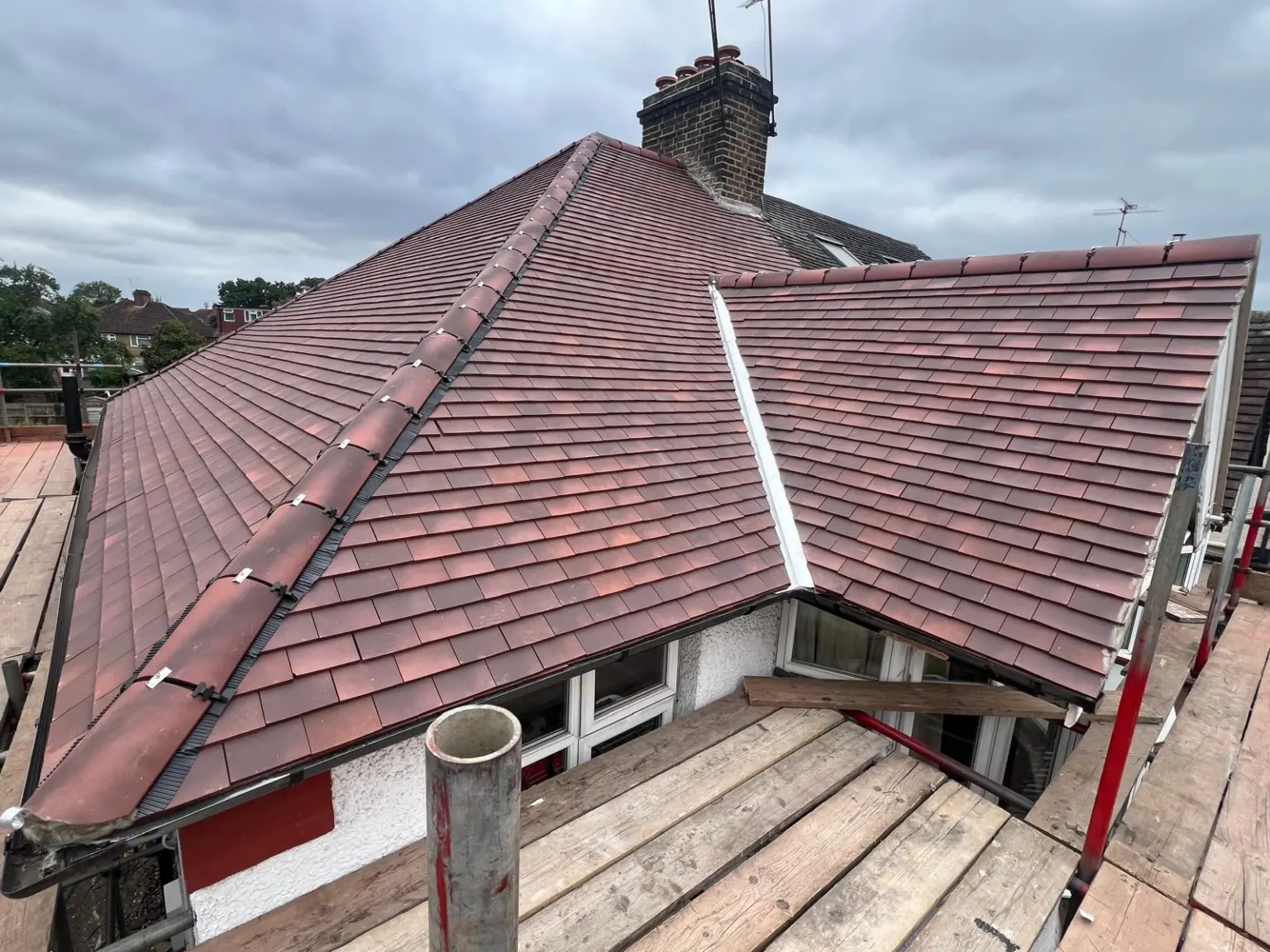
What are dry ridge and dry verge systems?
Dry ridge and dry verge are two ways of fixing the tiles along the top and the edges of your roof without using mortar. Traditionally, those tiles are bedded in sand and cement, which cracks and crumbles over time. A dry system holds them in place with screws, clips and purpose-made fittings instead, so there’s nothing to break down.
Dry ridge
The ridge is the line along the very top of your roof, where the two slopes meet. With a dry ridge system, the ridge tiles are held down with screws and clamps over a strip that runs the full length of the ridge. The strip seals out the wind and rain, and most systems include a ventilated gap too. That lets moist air escape from your loft, which helps to reduce condensation and damp. The ridge is finished off with end caps, so it looks neat from the ground.
Dry verge
The verge is the edge of your roof where it meets the gable wall. Instead of bedding the end tiles in mortar, a dry verge system uses individual units that are fixed to the roof battens. They sit alongside your tiles and cover the edge to keep the wind and rain out. If a unit is ever damaged, it can be replaced without having to rebuild the whole edge.
Colours to match your roof
Both dry fix systems come in a range of colours, including grey, brown and terracotta, so they blend in with what’s already up there. They work with concrete tiles, clay tiles and slate, so your roof keeps the look it has now.
What is dry fix?
Traditionally, ridge, hip and verge tiles are bedded in with mortar. Dry fix does the same job with mechanical fixings and purpose-made trims. There’s no cement involved, and the parts are screwed or clipped to the roof.
Why mortar is a problem
Mortar is one of the first parts of a roof to let go. Over the years the weather cracks it, frost breaks it up, and bits fall away. Once that happens, water can get in, and tiles can work loose. It’s a common reason people call a roofer out.
Why dry fix is worth considering
- No crumbling or cracking. There’s no mortar to break down, so there’s one less thing to keep an eye on.
- Stays flexible. Roofs move a little with the weather. Dry fix moves with them, where mortar tends to crack.
- Built-in ventilation. Many dry fix ridge systems let the roof space breathe, which helps keep damp and condensation down. [Confirm this applies to the system you’re fitting.]
- Quicker to fit. There’s no waiting for mortar to set, so the job is less affected by the weather.
- Looks tidy. The finish is neat and even, and it lasts.
Dry Ridge and Dry Verge FAQ's
Mortar can crack and fall out over time, and then it needs repairing. Dry fix has no mortar to break down, so it usually needs far less upkeep.
It can cost a little more upfront, but you don’t have to keep repointing it. We’ll give you a clear price before we start, so there are no surprises.
Yes. Dry fix systems are tested for UK wind conditions, and every ridge tile is fixed down with screws or clamps. The tiles are held far more securely than they are by mortar that has started to crack.
Yes. We clear away the old mortar and any loose pieces so the new system sits on a clean, solid base.
Give us a call or send us a message. We’ll arrange a visit and give you a free, no-obligation quote.